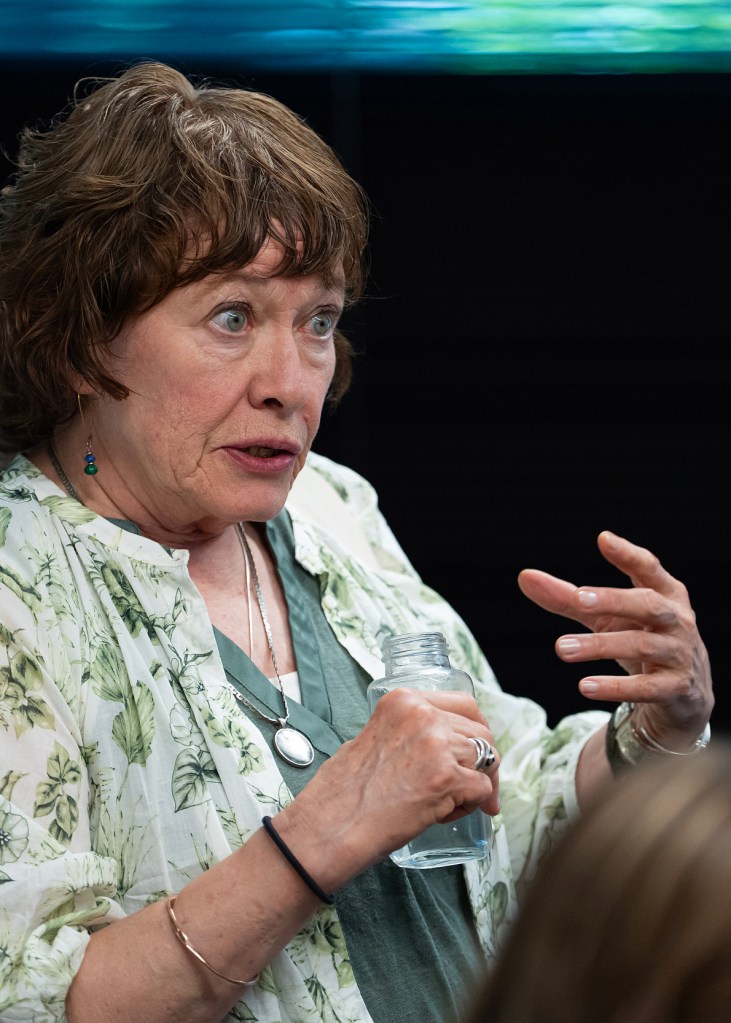
ELLETTSVILLE — Ann Blackwell’s life is anchored in the church, always has been.
For 89 years, ever since she lay swaddled in her mother’s arms during sermons, it’s the Ellettsville First United Methodist Church where you’ll find her most Sunday mornings.
Her parents, Harold and Elizabeth Gifford, were members more than a century ago. Blackwell raised her three daughters there. The two who live nearby, and their families, attend services at the limestone church on the west edge of town.
In many rural Indiana communities like this, it’s churches where residents find not just a spiritual balm but connections with their neighbors.
“There’s just something missing in my week if I don’t go to church,” Blackwell said during coffee hour after the Nov. 15 service. The Rev. Jimmy Moore had preached on the mystery of being alive and the value of each day.
“I suppose it gets to be a habit and like a battery, you go to church on Sunday to get recharged,” Blackwell said.

Blackwell is a church matriarch. She taught Sunday school to generations of children, some of them now grandparents. Her homemade Thanksgiving dressing and cranberry jello salad have been staples on the church holiday meal menu since the first dinner back in 1960. The midday meal raises money for the Women of Faith’s mission projects.
Denny Spinner knows how something as simple as a homemade holiday meal can unite a town. Spinner, the former mayor of Huntingburg and retired director of Indiana University’s Center for Rural Engagement, knows churches can be the backbone of a town.
“In rural America, churches are many times the last institution standing, the center of civic life, and a trusted resource,” Spinner wrote in a 2025 column in The Christian Post. He said where rural hospitals, schools, businesses and newspapers close, churches often remain.
“While other institutions disappear, churches hold a critical place in rural America,” he said.
A rural engagement center survey asking rural residents to list vital community assets put churches and faith-based organizations near the top.
IU Kelley School of Business professor Keith Dayton oversees student projects focused on enhancing lives and opportunities in the Indiana Uplands region — 11 south-central counties from Owen to Crawford. He has a list of more than 700 faith-based organizations in the area that includes a Tibetan gompa in Bloomington, a Quaker meetinghouse in Paoli and Dial-A-Prayer in Greene County.
“In a small town, when businesses close and everything starts to leave, it’s the churches that remain. They know the people and look after them,” Dayton said, advocating for funneling resources to these community hubs.

In 2024, IU’s rural engagement center was among 20 organizations across the nation to receive a Lilly Endowment grant from the Ministry in Rural Areas and Small Towns Initiative. The funds help sustain small church congregations working to strengthen their place as pillars that support not just church members but the entire community.
The initiative paired IU’s schools of social work, public health and applied research with rural Indiana congregations to support access to mental well-being resources in rural areas. This week, the initiative is hosting a trauma-informed care workshop at Switzerland Baptist Church in Vevay for 40 rural faith leaders from around the state.
David Odom, executive director of leadership education at Duke Divinity School, said investing in rural houses of worship strengthens communities. He spent 12 years pastoring small-town churches in North and South Carolina.
“Congregations in rural areas find creative solutions for all sorts of problems encountered by their neighbors because they are in places that don’t get much attention from government or media,” Odom said.
For Blackwell, church is family and it’s home, a place where she’s loved and welcomed no matter what.
When the United Methodist Church global governing body decided in 2019 to allow the ordination and marriage of LGBT people, more than 5,000 congregations left. Blackwell didn’t support the change but most Ellettsville members did, so the church stayed UMC-affiliated.
“We had a lot of members that left, but I just couldn’t,” she said. “This is my church.”
FPI News, a nonprofit newsroom, is funded through grants and donations from individuals, foundations and organizations. Sign up for our free newsletter.
FPI News reporter Laura Lane covers the people and issues of rural Indiana. Reach her at 812-760-1540 or laura.lane@fpinews.org.