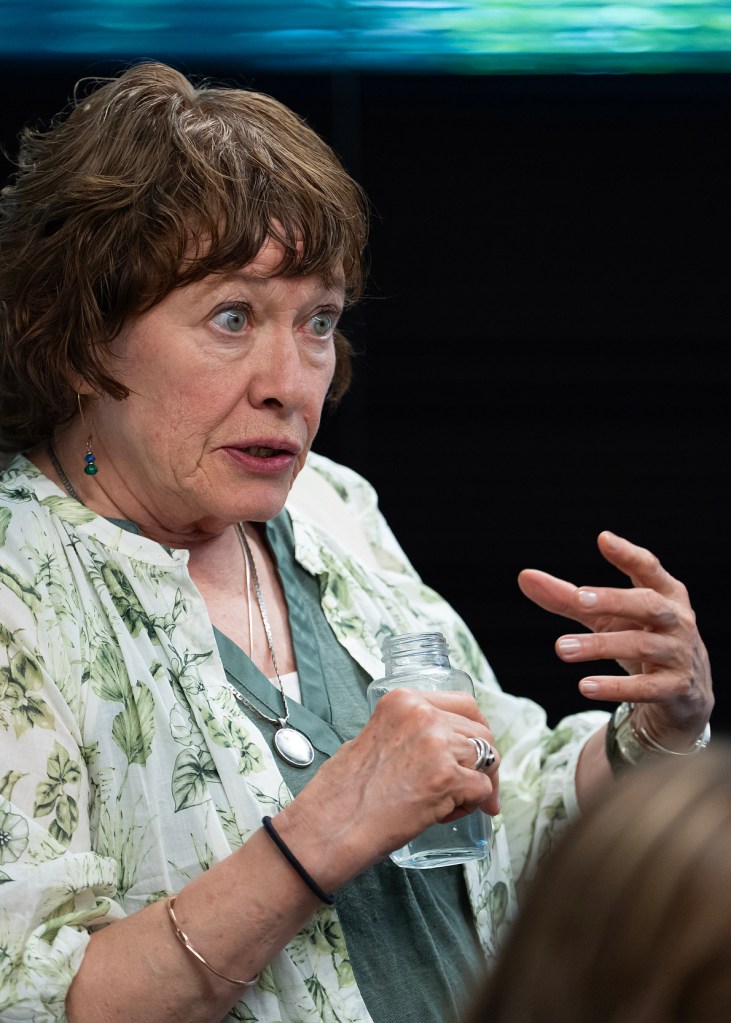
Brittany Miller is on a mission. After completing a treatment program and a stint at a Journey House Corp. transitional home for women in Indianapolis, she plans to get a job, buy a house, and regain custody of her children while living with her mother in Sullivan.
“The Journey House prepared me for my return to my family,” Miller said. “I was able to work, attend meetings, go to doctor’s appointments, and reach my goals for daily living.”
She heard about Journey House through word of mouth.
“I didn’t have anywhere to go, and I was completely homeless,” Miller said. “All I had was the clothes in my bags and the shoes on my feet when I went there.”

Women seek transitional housing to bridge the gap between a crisis — such as substance use, domestic violence, and other situations — and a long-term solution. However, those who work with women experiencing homelessness believe the intermediary component of the housing spectrum is slipping through the cracks.
“It’s difficult to find transitional housing spaces because years ago [the U.S. Department of Housing and Urban Development] shifted priorities,” said Savannah Whicker, CEO of ECHO Housing & Community Development in Evansville. “There’s a little more funding for rapid re-housing, but the majority is permanent housing. So transitional housing has been a bit absent from our continuum for many years now.”
According to Indiana’s 2026 homelessness report, transitional housing represents the smallest portion of beds available. As of January, the state had 9,201 year-round beds — 4,177 for emergency shelter, 3,243 for permanent housing, 942 for rapid re-housing, and 839 for transitional housing. That’s slightly lower than the 965 transitional housing beds reported in 2025.
But several Hoosier organizations are working to raise the number of transitional housing beds across the state while offering support services to help unhoused women recover, reorganize, and rebuild their lives.
“Not every woman has the stability to go into permanent housing, so they end up either going back to a bad situation or they become homeless again,” said Jaimie Sheth, CEO of Evansville-based JD Sheth Foundation, which funds projects like ECHO’s housing initiatives. “[Transitional housing] provides that layer of the housing continuum that they can actually stabilize and get the resources that they need.”
Dove Recovery House for Women
As an alumna of the Dove Recovery House for Women in Indianapolis, Stephanie Breeden serves as the model for Miller’s mission. Though Breeden initially didn’t want to enter the transitional housing and recovery program, she is now five years sober and works for the center in Indianapolis.
More than 600 women are on a waitlist for the nonprofit’s three Indiana locations, according to Breeden. The program serves 150 women annually, with a 55-bed facility in Indianapolis, a 15-bed house in Jasper, and a 15-bed building in Columbus, which opened in July. Breeden views access to transitional housing as a crucial step in recovery.

“Most individuals who need transitional housing have had severe trauma in their lives, and they need that grace to integrate back into the community. There is a new beginning once they leave here,” Breeden said. “I’ve gotten married. I went to Europe. I bought a new car. We bought a house. I’ve had all the promises come true. I also have had cancer twice since I’ve been sober, so that shows that you can hit some monumental life challenges and still stay sober.”
The Columbus facility resulted from a grassroots effort. Courtney Pence, director of operations for the house in Bartholomew County, noted that a group led by resident Mark Teike saw a need for a recovery program for women and discovered the Dove initiative through research. The community backed the project with a $5 million fundraising campaign, a donated location and designs for remodeling.
Pence receives referrals for women to stay at the Columbus house through treatment centers, hospitals and other organizations. The facility serves women 18 and older who have a primary diagnosis of substance use disorder and agree to a minimum 90-day program commitment. While the average stay is six months, the “doves” may stay up to two years. Donations and grants fund the trauma-informed recovery services and safe housing at no cost to the residents.
“We are not a detox. We’re not a hospital. We don’t have medical staff. We need the women to be medically stable to live safely in a community setting,” Pence said.

Pence said the women have a significant amount of daily structure, including medication monitoring, lengthy programming and therapy sessions. While residents settle into the Columbus facility, her goal is to build the culture and embed the house within the community.
“In a year, I’d like to have a garden where we’re growing our own vegetables. And the women are learning to be sustainable through the garden and through the pantries. We’re working on budgeting and financial literacy. We’re trying to teach them how to have a new life,” Pence said.
Meena’s Place

In Evansville, the JD Sheth Foundation is working with ECHO Housing & Community Development to develop Meena’s Place, a new transitional housing facility for women that will provide professional support, education and a stable living environment.
In 2024, not long after ECHO absorbed the House of Bread and Peace, an emergency shelter for women and children, Whicker and Sheth began collecting data on who the facility was serving.
In a two-year reporting period, data revealed that around 64% of women reported a history of domestic violence, sexual assault, dating violence, stalking or human trafficking. Nearly 60% of women entering the shelter had no cash income, and 33% of the unhoused remained longer than 90 days. In addition, about 40% of the women and families exited to destinations that were not permanent housing.
“[The data] provides a pretty compelling picture of why Jaimie and I believe an intermediate housing model is needed,” said Whicker.
After renovations, Meena’s Place will contain four bedrooms and three bathrooms, with the capacity to house four to 12 women and children. The property will also feature a four-car garage with a laundry room and mudroom next door.
Women can stay at the transitional facility for up to two years, with priority access given to those coming from the House of Bread and Peace. Residents will pay 30% of their annual gross income, not to exceed $450 a month and including utilities, on a year-to-year lease.
“They’ll get all the wraparound services they need, including job placement, financial literacy classes, mental health services, social work services, pretty much anything that they would need to stabilize and move on to permanent housing,” Sheth said.


After Meena’s Place opens in March 2027, the goal is to establish a “homelessness to homeownership” model.
“We would donate a single lot to the JD Sheth Foundation,” Whicker said. “They would then build a single-family home for the woman or woman with children at Meena’s Place. And then once they purchase that affordable home, that money would be reinvested in the next home. So it’s essentially women housing women.”
Journey House Corp.
Jakelia Taylor started the Journey House Corp. in 2024 after witnessing many of her family members struggle with substance use. She opened a women’s transitional home in St. Joseph County, followed by a men’s facility. In April, Journey House Corp. launched a transitional housing site for women on the east side of Indianapolis.
Taylor relies on earnings from private business ventures to invest in the nonprofit. She partners with builders who acquire land, demolish blight, and construct new homes to “change the direction of transitional housing.”
“These houses are $300,000, $400,000 homes that we are placing individuals in. We decorate them really nice to give them that sense of hope,” Taylor said.

The east side Indianapolis home can house 13 women, who may stay up to a year. The facility offers on-site counseling, helps women secure documentation and necessities, as well as build resumes, prepare for interviews and learn life skills.
Residents sign a bed occupancy agreement and pay a $34-per-day program fee once they become employed and establish income. Miller mentioned working two jobs during her stay.
“Even while being homeless, we still have dreams and aspirations on what we would like to do,” Miller said. “We are good people, and we are able to change our lives.”
Taylor said Journey House Corp. serves a variety of people, including those facing homelessness, dealing with abuse and mental health issues, going through substance recovery and leaving prison.

“We house all walks of life, honestly, just giving them that second chance,” she said. “Women are out here dealing with abuse, substances, losing their children … it’s important for me to pour into women so that they can realize their worth.”
Journey House Corp. has several transitional and recovery housing projects in the works, including two houses that will house 24 men and 24 women, plus four duplexes where each unit will hold about 12 beds. The completion goal for these Indianapolis projects is the first week of January.
“The Journey House can’t house everyone,” Taylor said. “But if I can open up my door to help others open up homes like this, it’ll be a lot more support, and we can get a lot more groundwork covered.”
FPI News, a nonprofit newsroom, is funded through grants and donations from individuals, foundations and organizations. Sign up for our free newsletter.
Mitizi S. Morris is an FPI News freelance contributor. You can reach her at mitzismorris@gmail.com.